In the Details
I have always found myself drawn to smaller elements within a scene rather than the scene as a whole.
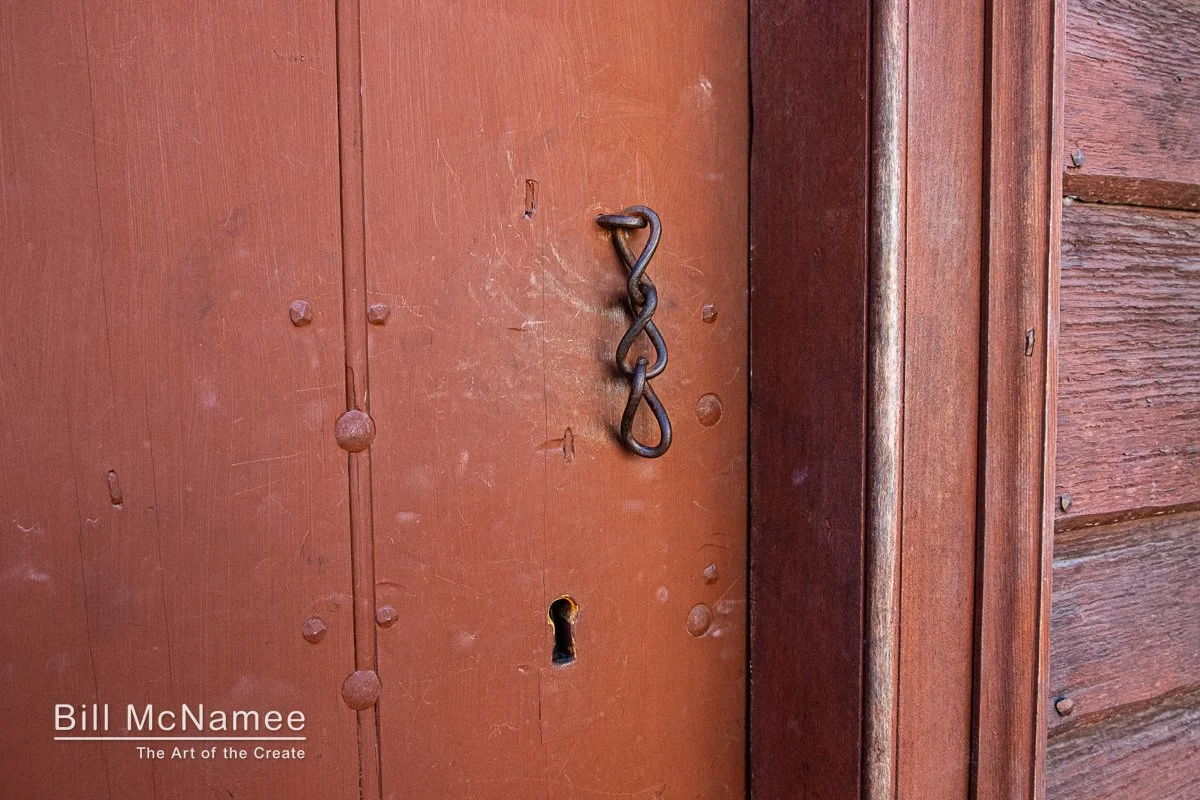
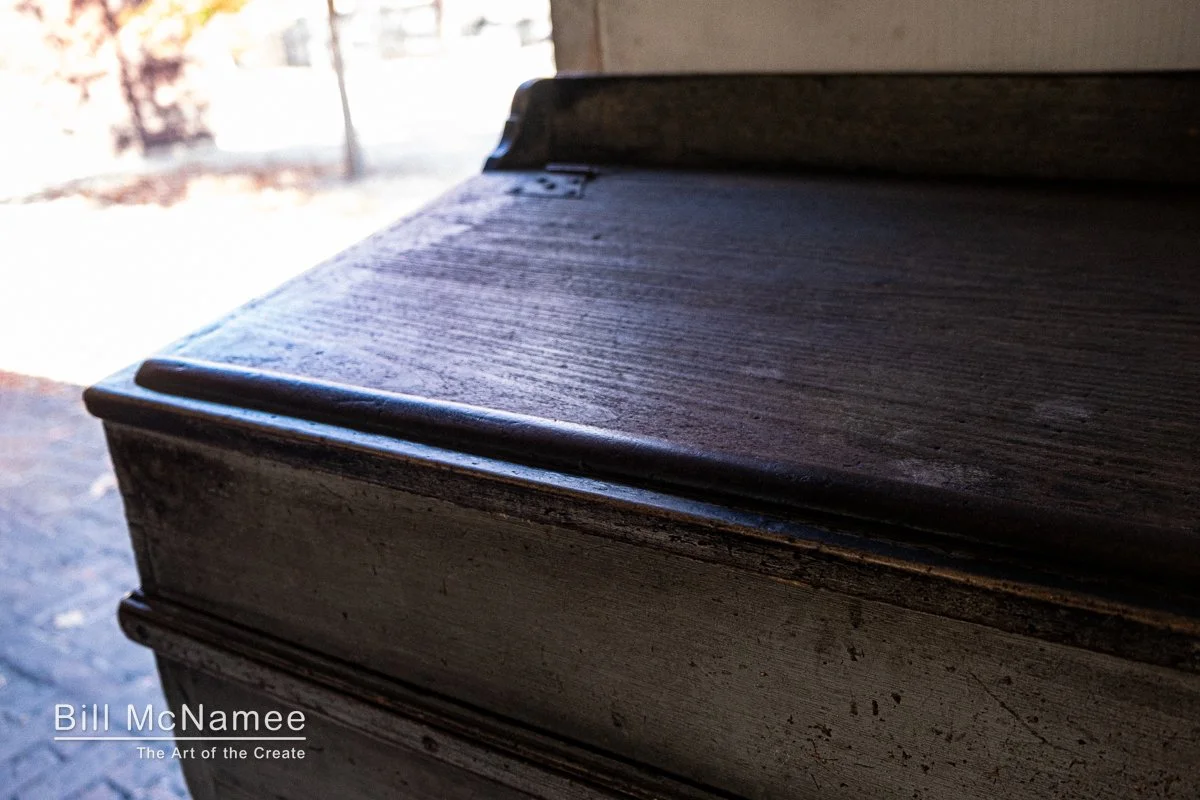
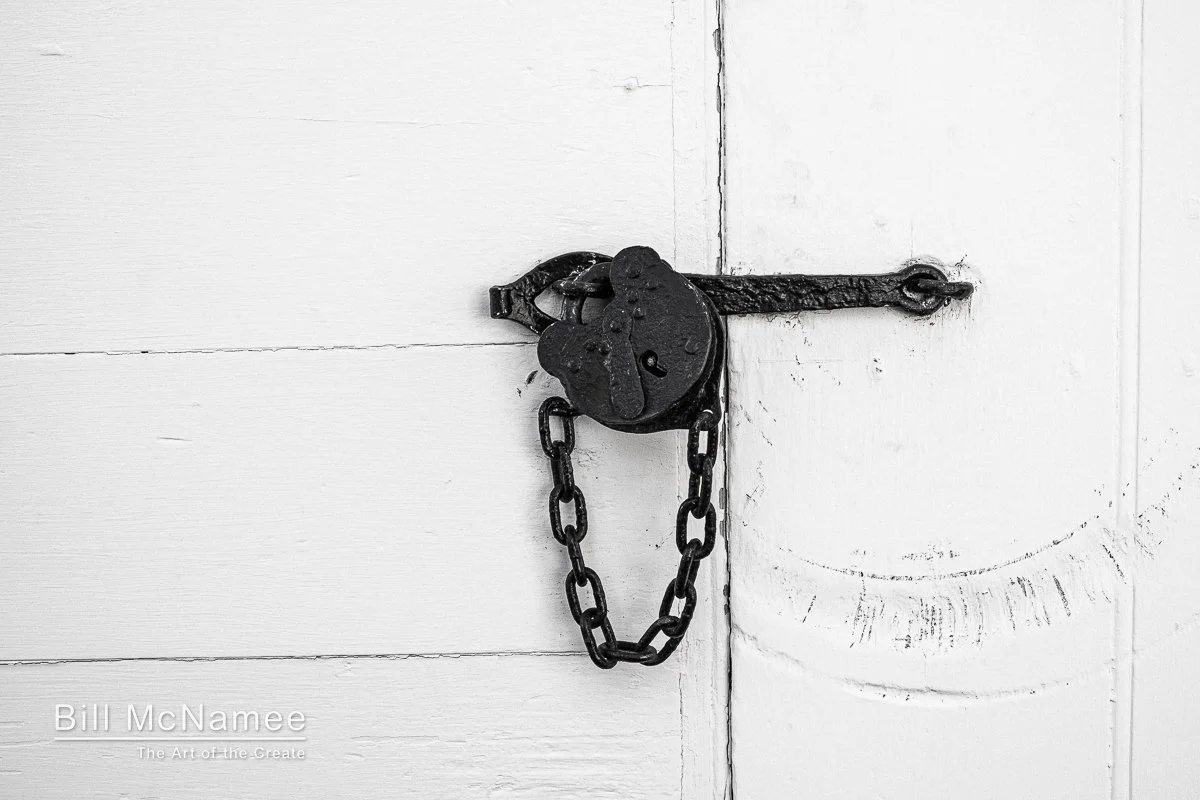
While walking through Colonial Williamsburg in mid November of 2021, that instinct surfaced again. Instead of trying to capture entire buildings or broader views of the historic district, I kept noticing the parts that most visitors would likely overlook. Iron hardware mounted against painted wood. The worn surface of a chest. The way late season light angled across a lock and revealed texture that would otherwise blend into the background.
The timing of this visit played a role. It was just after the long months of the Covid lockdown had eased, and simply being out with a camera felt different than it had in the past. The air, while warm for November, carried that mid fall clarity, and the lower sun created contrast that emphasized surface and form. Shadows were longer. Colors were more subdued. Wood and metal seemed to hold onto light in a way that made them more pronounced.
Rather than photographing Colonial Williamsburg as a destination, I found myself treating it as a study in texture and structure. A hinge became more interesting than the doorway it supported. A lock held more visual weight than the building behind it. The subject was no longer the location itself, but the details that give Williamsburg its character.
Two of these images, in particular, stayed with me as I worked through them later. In one, light moves across the grain of a wooden table and defines every ridge and imperfection. In the other, shadows frame the composition and turn the period flooring into a warm image of intrigue. What appeals to me in both is not the subjects, but the light and texture that transform them.
This way of seeing extends beyond a single location. I am often drawn to everyday items, abstract shapes formed by contrast, and the subtle relationship between color and texture. Creativity, at least for me, tends to begin with attention. The more closely I look, the more complexity I find in something that initially seemed ordinary.
Colonial Williamsburg provided the setting for these four photographs, but the larger idea is not limited to historic streets or preserved architecture. The same potential exists anywhere. When you slow down enough to study the smaller components of a space, you begin to understand how they contribute to the whole. The details are not separate from the larger story. They are what quietly shape it.
___
Technical Notes:
These images were captured using a Fujifilm X-T1 paired with the Fujinon XF 18-55mm f/2.8-4 R LM OIS lens. Processing was completed in Lightroom, with adjustments focused on color, texture, and clarity. All photographs are presented in a 4:6 aspect ratio.